
Whimsy Color By Number Game
Art Coloring GroupBoard
4.8718.00 Reviews
- Version
- 1.2.9
- Installs
- 500.00K
- Age Rating
- Everyone
Screenshots

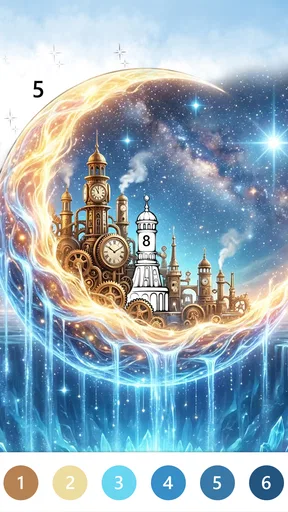



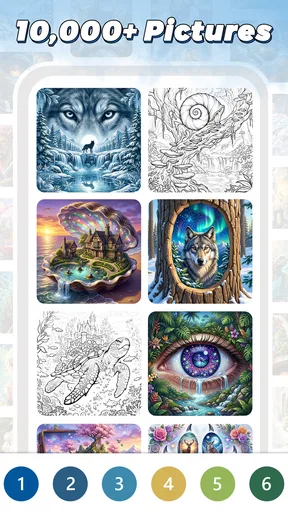

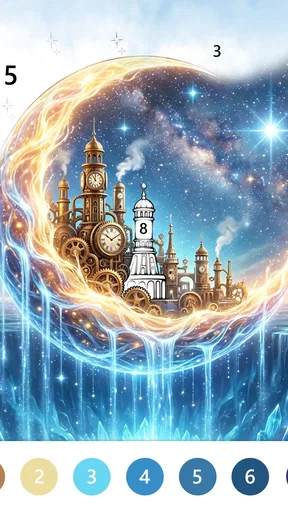
Our Review of Whimsy Color By Number Game
 Analysis by Appyee
I opened Whimsy Color By Number Game expecting a quiet paint-by-number experience, and that is exactly where it works best: as a gentle board game for short, low-pressure sessions. The basic appeal is immediate. I choose a picture, match numbered spaces with their colors, and watch an unfinished drawing gradually become complete. There is no complicated rulebook to learn, which makes it easy to start even when I only have a few minutes.
What makes this particular game worth discussing is not a dramatic competitive system or a demanding strategic challenge. Its appeal comes from the small goals built into each coloring page, the visible sense of completion, and the way the pace encourages me to continue without making every session feel like a test. Art Coloring Group has kept the idea approachable, while still giving it enough structure to feel more purposeful than simply tapping random colors on a screen.
It is free to download and suitable for Everyone, although optional in-app purchases range from $0.99 to $59.99 per item. That combination matters: I can try the core experience without paying, but anyone who dislikes purchase prompts or prefers a completely unrestricted coloring tool should approach it with that trade-off in mind.
How the first goals shape the experience
The first useful goal is simply finishing a picture. That sounds obvious, but it is important in a paint-by-number game because the task needs to feel satisfying before deeper progression can matter. Here, each numbered area gives me a clear next action. I do not have to decide what to draw, select a color palette from scratch, or worry about whether my artistic choices are technically good. The game narrows the decision down to finding the matching spaces and filling them.
I find this especially comfortable when I want something restful rather than mentally demanding. A completed section acts as a small checkpoint, while the remaining uncolored areas keep the page from feeling finished too soon. The result is a steady rhythm: identify the current color, scan the image, fill what I can, and move toward a complete illustration.
That structure also makes the game approachable for people who are not confident with traditional drawing apps. In a freeform coloring application, I might spend more time choosing tools, correcting mistakes, and trying to make the result look intentional. Whimsy Color By Number Game removes most of that friction. The goal is not artistic originality; it is careful completion and the visual reward that comes from seeing the artwork emerge.
For a realistic everyday example, I can imagine using it during a short break between errands. I start a picture while waiting, complete a few numbered areas, and stop without losing the sense that I made progress. Later, I can return to the same kind of task and continue the unfinished work. That makes it more practical than a game that requires a long uninterrupted session before anything meaningful happens.
The early goals are therefore clear, but they are also modest. Players looking for a strong narrative hook, competitive rankings, or a complex opening tutorial may find the beginning too simple. The game is asking me to enjoy the act of coloring, not to overcome a large obstacle. That is a strength for relaxation and a weakness for anyone who needs immediate intensity.
Why completion feels more useful than winning
In many board games, the central satisfaction comes from beating an opponent or solving a difficult position. This one uses a different kind of reward. The completed image is the result I am working toward, and the progress is visible directly on the page. I do not need a dramatic victory screen to understand that I have accomplished something.
That design gives the game a calm identity, but it also means my motivation depends heavily on whether I enjoy repetition. If I like watching small unfinished details disappear, the loop is easy to settle into. If I need changing rules or unpredictable outcomes, the same loop can feel narrow after the novelty fades.
One useful habit is to avoid treating every picture as a race. I get more from the game when I use the numbers as a loose guide rather than rushing across the entire image. Completing one color at a time helps me notice the composition, while switching between large and small areas prevents the session from becoming a tedious hunt for a single hidden space.
Progress signals and the feeling of moving forward
The clearest progress signal is the artwork itself. Every filled space changes the image, so I can see the result of my actions immediately. This is more effective than a progress meter alone because it connects advancement to something concrete. A nearly finished picture looks different from the starting outline, and that visual change gives me a reason to continue even when the remaining areas are small.
The game’s appeal also comes from the contrast between easy early fills and the more careful work needed near completion. Large sections can create quick momentum. Later, the remaining details ask for more attention because they are easier to overlook. That change gives the session a natural shape without requiring complicated rules.
I would not describe the progress as deeply layered in the way a role-playing game uses character abilities, equipment, or branching objectives. The satisfaction is closer to collecting completed moments than building a powerful avatar. That distinction is important before downloading it. The game can sustain interest through a sequence of pictures and the pleasure of finishing them, but it is not designed around long-term strategic development.
For me, the strongest progress signal is the point when an image becomes recognizable. At the beginning, the numbered areas can make the page feel fragmented. As more colors are placed, the picture starts to read as a whole. That transformation is a small but effective reward, and it is one reason the game can appeal to both casual players and people who use coloring as a way to slow down.
There is also a practical benefit for younger or less experienced players. Because the task is broken into numbered pieces, the game offers a simple way to understand progress without needing advanced reading or gaming skills. The Everyone age rating fits that approachable presentation. Adults can enjoy it too, but I would frame it as a shared calm activity rather than a game intended to challenge an experienced board-game player.
What the version and audience suggest
The current version is 1.2.9, and the game supports devices running Android 7.1 or later. That makes it relevant to people using older compatible Android hardware, although the experience will still depend on the particular phone or tablet. On a larger screen, numbered areas should be easier to inspect; on a smaller display, tiny sections may demand more zooming and patience.
Art Coloring Group is the developer behind the game, and the store summary presents it as “Paint by Number Whimsy Games,” with “Whimsy Color” used as the short description. Those labels capture the central idea, but they do not fully explain the practical question I would ask before installing it: will the coloring loop remain pleasant after the first few pictures? My answer is yes for short relaxing sessions, but only if I already enjoy repetitive completion tasks.
The game has an average rating of 4.8 from around 4.6 thousand ratings, with 718 reviews. It has also passed 500 thousand installs. Those figures suggest that the simple format has found a substantial audience, but they should not be read as proof that it suits every type of player. A popular relaxing game can still be the wrong choice for someone who wants tactical decisions, direct competition, or a strong sense of mastery.
Difficulty, pacing, and the point where patience matters
The difficulty curve in a paint-by-number game is less about increasingly complicated rules and more about attention. At first, matching colors to obvious numbered areas feels effortless. As the picture fills, the available spaces become less prominent, and I need to inspect the image more carefully. The challenge comes from locating what remains rather than deciding what move is strategically best.
That is a gentle curve, and I think it suits the game’s purpose. The early stage lets me understand the interaction without pressure. The later stage gives the picture enough resistance to prevent every session from becoming a mindless tap. Still, the difficulty can feel uneven depending on the artwork. A design with many small sections may require much more patience than one with broad, clearly separated areas.
This is where the game differs from traditional board-game alternatives. A classic board game usually creates difficulty through rules, opponents, probability, or planning several turns ahead. Whimsy Color By Number Game creates difficulty through visual search and sustained concentration. Neither approach is better in every situation. If I want a quiet activity before bed, this game is more suitable than a competitive board game. If I want to test decision-making or react to another player, the usual board-game format is the better choice.
Compared with a freehand coloring app, the challenge is also more controlled. I am not choosing every artistic detail, so the game is easier to begin and harder to personalize. A freehand app gives me more creative control and can produce a more individual result, but it also asks more from me. This title is better when I want guided progress; the alternative is better when I want to create rather than complete.
My practical advice is to alternate between sections instead of insisting on one color until every matching space is found. That approach reduces the frustration of searching for a tiny remaining patch. If I notice that I am repeatedly scanning the same area, I take a short break and return with fresh eyes. In a game built around visual attention, forcing the final details can turn a relaxing activity into unnecessary work.
Where the pacing succeeds and where it slows
The pacing succeeds when the picture changes often enough to show that my effort matters. Large fills provide quick feedback, while smaller details extend the session. The balance is most enjoyable when I can move between those two kinds of work. It becomes less appealing when too much of the remaining image consists of tiny spaces that feel like cleanup rather than discovery.
That limitation is not a flaw unique to this title; it is a natural risk of paint-by-number design. The more complete the picture becomes, the less dramatic each individual tap may feel. The game depends on the overall transformation to carry me through the final stretch. Players who enjoy polishing a nearly finished image may find that stage satisfying. Players who prefer constant novelty may stop before completion.
I also would not choose this as my main game when I have a strong need for measurable skill improvement. There is care involved in finding the right spaces, but the game does not replace the layered mastery of chess, strategy board games, or puzzle titles with increasingly complex rules. Its difficulty is deliberately accessible, and that accessibility is central to its identity.
Retention pressure and the free-to-play trade-off
The game encourages continued play through unfinished pictures and the natural desire to see a complete image. That is a softer form of retention than a competitive leaderboard or a demanding daily challenge. I can stop after a few minutes and still feel that the session was worthwhile, but I may also keep going because the remaining colored areas are visible and close to completion.
That gentle pressure is one of the better aspects of the design. It gives me a reason to return without making the game feel like an obligation. At the same time, the effectiveness of this loop depends on variety. If the available pictures do not keep feeling visually distinct, the completion motive alone may not be enough for long-term players.
The free price lowers the barrier to trying it, which is useful for families and casual players who are unsure whether paint-by-number games are for them. Optional purchases from $0.99 to $59.99 per item create a wider spending range, so I would recommend deciding in advance whether I am comfortable making purchases. The free entry is appealing, but the presence of paid items means the experience should not be confused with a completely cost-free coloring tool.
For younger players, I would still supervise store purchases even though the game is rated Everyone. An age rating describes suitability of content, not a personal budget or a family’s preferred approach to in-app spending. For adults, the same advice applies in a simpler form: enjoy the free portion first, then decide whether any optional purchase genuinely improves the way you want to play.
The retention model is therefore relatively easy to understand. The game keeps me engaged with visible unfinished work, the promise of a completed image, and the convenience of returning for another short session. It is not the right fit if I dislike games that may present purchase options, or if I want a single upfront payment with no free-to-play considerations.
Who should install it, and who should skip it
I would recommend it to someone who wants a calming mobile activity, enjoys visual organization, or likes the satisfaction of completing small tasks. It can work well during commutes, quiet breaks, or evenings when I want something more interactive than watching a video but less demanding than a strategy game. It is also a reasonable choice for a player who finds freehand drawing intimidating and prefers clear guidance.
I would be more cautious recommending it to people who need social competition, deep board-game decisions, or a strong story. The numbered coloring format is the whole point, so anyone who finds repetitive tapping boring will probably not be persuaded by the surrounding presentation. Likewise, creative users who want to mix colors, draw their own shapes, or make every artistic decision may be happier with a dedicated art application.
Families should also consider screen size and patience. A tablet-sized display may make detailed pictures more comfortable than a compact phone, while younger children may enjoy the immediate matching task but need help with purchases or with locating very small unfinished spaces. The Everyone rating makes the game broadly approachable, yet the best experience still depends on how much concentration the player wants to give it.
My progression verdict after weighing the whole loop
Whimsy Color By Number Game succeeds because its goals are easy to understand and its progress is visible. I always know what I am doing, and each completed area contributes directly to a recognizable result. The difficulty rises mainly through detail and attention, not through complicated mechanics, which keeps the experience welcoming but limits its appeal for players searching for serious challenge.
The pacing is strongest in short sessions. I can make meaningful progress without committing to a long play period, and the unfinished image provides a natural reason to return. The retention pressure stays fairly gentle in concept, though the free-to-play structure and optional purchases are worth remembering before handing the game to a child or spending beyond the initial free experience.
Compared with a conventional board game, this is less about winning and more about completing. Compared with a freehand coloring app, it offers more guidance and less creative freedom. Those trade-offs define the recommendation. I would choose this game when I want a guided, peaceful task with a clear visual payoff; I would choose another category when I want strategy, competition, narrative, or unrestricted artistic control.
Overall, Art Coloring Group has made a focused board game for people who enjoy calm progress rather than constant stimulation. The average rating of 4.8 and its audience of over 500 thousand installs show that the formula has broad appeal, but my personal verdict is more specific: it is a good companion for small pockets of downtime, provided I genuinely like the rhythm of searching, matching, and finishing. If visible completion is what keeps you motivated, this is an easy game to settle into; if you need complex goals or creative freedom, skip it.
Verdict
Strengths of Whimsy Color By Number Game
- Simple tap-to-color controls are easy for children and casual players.
- Large artwork library offers plenty of pictures to complete.
- Relaxing gameplay works well for short breaks or bedtime sessions.
- Color palettes make it easy to follow numbered sections accurately.
- Completed images can provide a satisfying sense of progress.
Limitations of Whimsy Color By Number Game
- Some advanced pictures may require in-app purchases to unlock.
- Frequent ads can interrupt coloring, especially between completed images.
- Small numbered areas may be difficult to select on compact screens.
- Gameplay can feel repetitive after extended coloring sessions.
- Offline availability may vary for certain images or app features.
Other Releases by Art Coloring Group
View All
Bible Color Paint By Number
Board4.8

Nostalgia Color by number game
Board4.4

Macabre Color Paint By Number
Board4.8

Black Color Paint By Number
Trivia4.8
Similar Picks in This Category
View All
Ludo King®
Gametion4.1

Ludo
Yarsa Games4.6

Tile Master® - Matching Game
Higgs Studio3.6

Checkers Online
CC Games4.6

Dominoes
Loop Games4.7

Chess
Chess Prince4.6
Frequently Asked Questions
What is Whimsy Color By Number Game?
Whimsy Color By Number Game is a relaxing digital coloring app built around numbered illustrations. Each image is divided into small sections, and players fill them by selecting the matching color. The artwork generally focuses on charming, imaginative, and whimsical themes, making the game suitable for short breaks, casual entertainment, and users who enjoy creative activities without needing traditional drawing skills.
How does the coloring gameplay work?
After choosing an illustration, you select a color from the palette and tap the areas marked with the corresponding number. The game guides you through the picture step by step, while zoom controls can help with tiny sections. This straightforward system makes the app accessible to beginners, although completing highly detailed images may require patience and careful tapping.
Is Whimsy Color By Number Game free to download and play?
The app can generally be downloaded without an upfront purchase, but the available experience may include advertising, optional in-app purchases, or premium artwork depending on the version and platform. Some content may be unlocked through rewards, while other pictures or features could require payment. It is worth checking the store listing for current pricing before downloading.
Does the game require an internet connection?
An internet connection may be useful for downloading new coloring pages, displaying advertisements, synchronizing progress, or accessing optional online features. Previously loaded artwork may remain playable offline, but this can vary according to the app version and device. If you plan to use it while traveling, open several pictures beforehand and confirm which features continue working without mobile data or Wi-Fi.
Is Whimsy Color By Number Game suitable for children?
The simple controls and number-based coloring format can make Whimsy Color By Number Game appealing to children, families, and adults. However, parents should review the app’s age rating, advertising, privacy information, and in-app purchase settings before allowing independent use. If the game includes external links, social features, or paid content, parental controls are recommended to prevent accidental purchases or unwanted access.
Play our best games!


